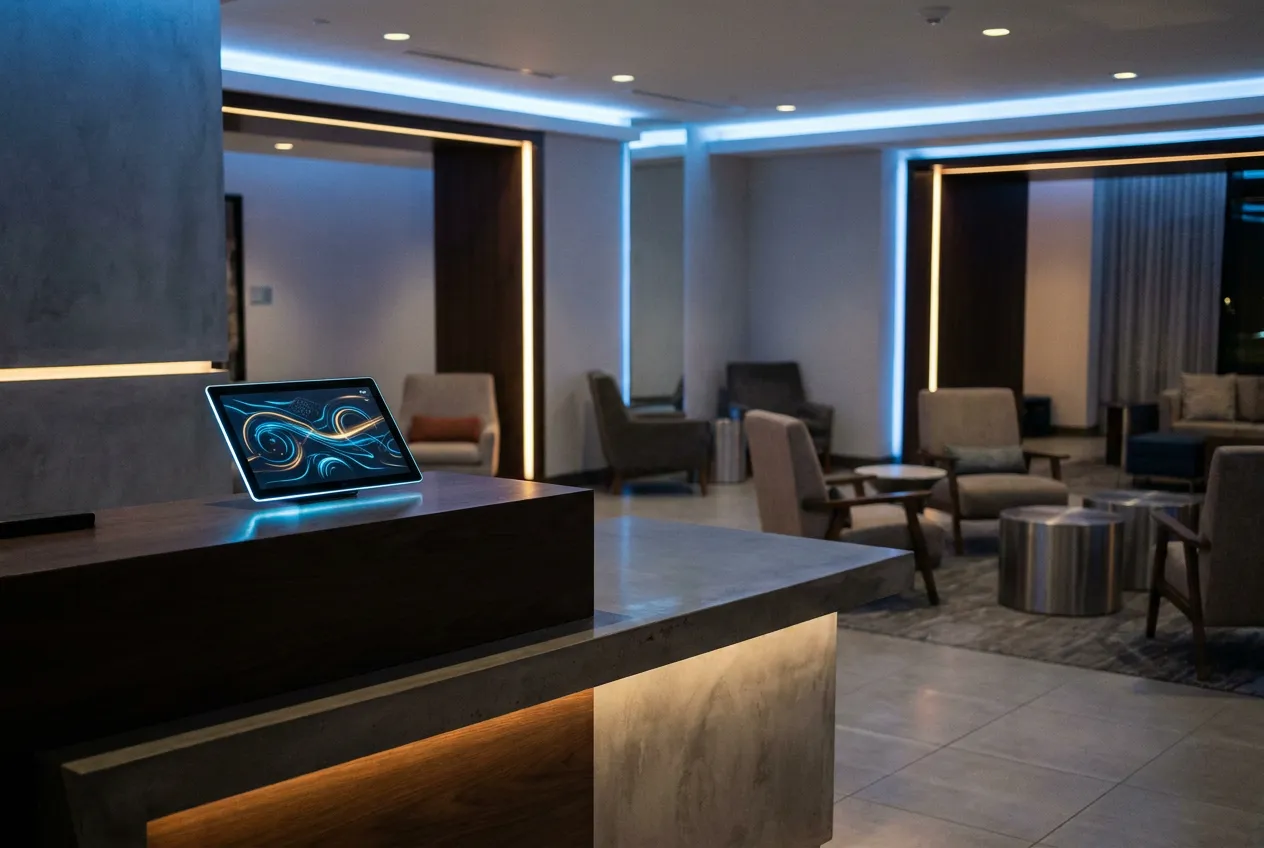
Artificial intelligence has moved from buzzword to practical tool in hotel marketing. Used well, it removes repetitive work such as drafting emails, resizing creative and summarizing reports, so a small team can spend more time on guests and strategy. Used carelessly, it produces generic copy, inaccurate claims and a brand voice nobody recognizes.
This guide explains where AI helps hotels automate digital marketing today, where human judgment still matters, and how to start without risk. It is written for owners and managers, not engineers.
What AI Can and Cannot Do for a Hotel
AI is strongest at tasks that are repetitive, pattern based and easy to review. It is weakest at facts it cannot verify and at knowing your property the way your team does. A useful rule: let AI draft, analyze and sort, and let a person approve anything a guest or search engine will see.
| Good fit for AI | Needs human oversight |
|---|---|
| First drafts of emails, captions and page copy | Final copy, claims about amenities, prices and policies |
| Resizing and adapting creative for channels | Brand voice and visual direction |
| Summarizing reports and spotting trends | Decisions about budget and strategy |
| Answering common guest questions on your site | Complaints, special requests and sensitive cases |
Seven Ways Hotels Can Automate Marketing With AI
1. Content drafting and updates
AI can produce outlines and first drafts for destination guides, package descriptions and seasonal pages. Edit each one with local knowledge, real details and your tone before publishing. Search engines reward original, helpful content, not generic text.
2. Email and guest journey automation
Pre-arrival, post-stay and win-back emails can be triggered automatically and personalized by stay type, season or interest. AI helps write variants and choose send times, while you set the rules and review the messages.
3. Paid ad creative testing
AI can generate headline and image variations so you can test which resonate. Keep a person responsible for budgets, targeting and brand safety.
4. Review responses
Draft replies to reviews, then personalize with specifics before posting. A fast, thoughtful response improves how future guests see the property. Avoid identical template replies, which read as automated.
5. Website assistants and guest questions
A chat assistant can handle common questions about directions, check-in times and amenities at any hour and hand off to staff for anything else. It should only use information you provide and make it easy to reach a human.
6. Reporting and insights
AI can summarize traffic, bookings and ad results into plain language, flag unusual changes and suggest what to test next. You still need accurate tracking behind it.
7. Website building and optimization
AI can speed up page creation, image optimization and structured data. Our AI-powered websites for hotels combine fast builds with search friendly structure, and our AI-powered hospitality marketing service applies the same thinking to campaigns.
Protect Your Brand Voice and Accuracy
- Write a one page brand voice guide with example sentences and words to avoid, and give it to every tool and person who writes for you.
- Keep a verified fact sheet of amenities, hours, policies and distances. Check AI output against it.
- Never publish pricing, availability or policy statements without confirming them.
- Be careful with guest data. Do not paste private reservation details into tools whose data handling you have not reviewed.
Not sure where your hotel stands?
Get Your Free Hotel Marketing Audit
We review your search visibility, website conversion, OTA dependence and reviews, then send a personalized report with next steps.
Get Your Free Hotel Marketing AuditA Low Risk Way to Start
- Pick one repeating task that eats staff time, such as monthly emails or review replies.
- Define what a good result looks like and who approves it.
- Pilot for thirty to sixty days and compare time saved and results against the old process.
- Expand only after the pilot proves useful and your review process works.
Automation works best on top of a strong base. If your site is slow or your booking path is confusing, fix that first. See our guide to hotel website design features.
Measuring Whether AI Is Helping
Track hours saved, response speed, email engagement, cost per booking and direct share. If automation saves time but quality or conversion falls, tighten the human review step. The aim is better marketing delivered more efficiently, not more content for its own sake.
For a plan matched to your property, explore hotel digital marketing with AI assisted workflows.
Frequently Asked Questions
How can hotels use AI in digital marketing?
Hotels commonly use AI to draft content and emails, test ad creative, answer routine guest questions, summarize performance reports and speed up website work, with staff reviewing anything published.
Will AI replace hotel marketing teams?
AI is better viewed as a tool that handles repetitive tasks. Strategy, brand voice, guest relationships and quality control still depend on people who know the property.
Is AI generated content bad for hotel SEO?
Search engines focus on helpfulness and originality, not how text was produced. Generic, unreviewed AI copy tends to perform poorly, while edited content that adds real local detail can perform well.
What is the safest first step for a small hotel?
Start with a contained, low risk task such as drafting email campaigns or review replies, keep a human approval step, and measure the time saved before expanding.
Ready for a clear plan?
Get Your Free Hotel Marketing Audit
We review your search visibility, website conversion, OTA dependence and reviews, then send a personalized report with next steps.
Get Your Free Hotel Marketing AuditKeep Learning
Want to see how your property ranks against local competitors?
Request your free hotel audit. We review your search visibility, website conversion, OTA dependence and reviews, and send a personalized report within 24 business hours.
Ready to Put These Strategies to Work?
Let's build a custom digital marketing strategy tailored to your property and goals.