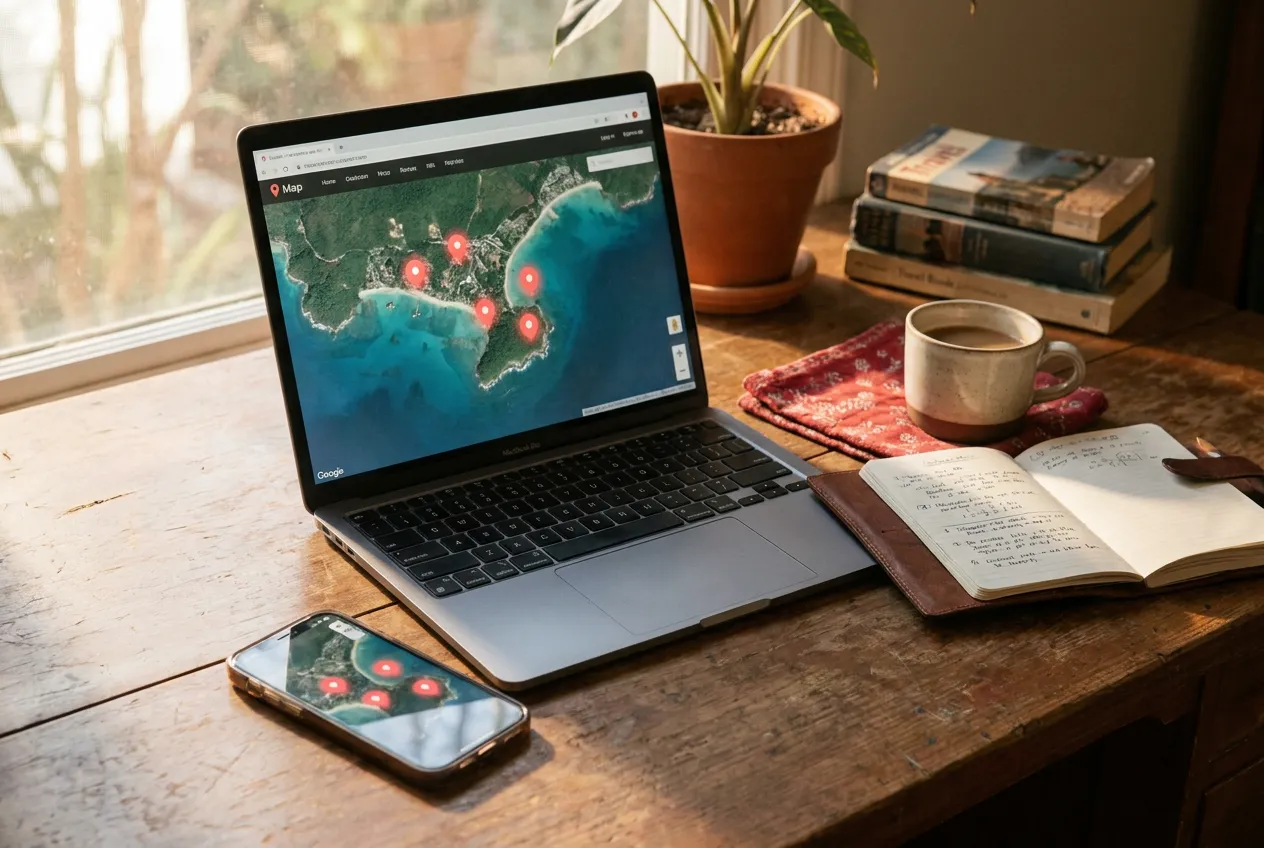
Many travelers decide where to go before they decide where to stay. They search for a destination, an attraction or an experience, and only then compare hotels. If your website only talks about your rooms, you miss the earliest part of that journey.
This guide explains how a hotel can use its own website to show up for destination searches, and how those visitors can be guided toward a direct booking. It builds on our broader guide to getting your hotel found on Google and our Hotel SEO service.
Understand the Three Kinds of Destination Searches
- Stay searches: "boutique hotel in [town]" or "beachfront resort near [landmark]". These are close to booking.
- Planning searches: "best time to visit [destination]" or "[town] weekend itinerary". These come earlier and have more volume.
- Experience searches: "surf lessons in [town]" or "wine tours near [region]". These match what a guest wants to do, not where to sleep.
Each type needs a different kind of page. Trying to cover all three with the homepage rarely works.
Build Destination Pages That Earn Their Place
A destination page should answer a real question better than a generic travel site. Write from first-hand knowledge: how far the property is from the airport, what the area is like in each season, which attractions are walkable and which are not, and where your staff actually send guests.
- Give each page one clear topic and a unique title and heading.
- Add specific details such as distances, travel times and seasonal notes.
- Link naturally to the room types or packages that fit the visit.
- Keep a visible booking link so planning visitors can check availability.
Strengthen the Local Signals Behind Your Pages
Search engines use your location signals to decide which hotels belong in a destination search. Keep your name, address and phone consistent everywhere, complete your Google Business Profile, and build mentions from local tourism boards, chambers of commerce and partner businesses. Our guide to local citation building covers the process step by step.
Use Structured Data and Clean Technical Basics
Mark up your property with hotel and organization structured data, add FAQ markup only where a real FAQ appears on the page, and make sure every destination page is in your sitemap, has its own canonical URL and loads quickly on mobile. Technical problems can keep good content from ranking.
Not sure where your hotel stands?
Get Your Free Hotel Marketing Audit
We review your search visibility, website conversion, OTA dependence and reviews, then send a personalized report with next steps.
Get Your Free Hotel Marketing AuditConnect Destination Traffic to Direct Booking
Destination visitors are often early in their research and may not book on the first visit. Offer something useful in return for attention: a printable itinerary, a seasonal packages page or an email sign-up for offers. Then make sure the booking path is free of friction when they are ready.
Measure What Matters
Track impressions and clicks for destination queries in Google Search Console, then follow those visitors through to booking-engine visits and reservations in your analytics. Review quarterly and expand the pages that attract real interest. Rankings take time, and no one can promise a specific position or timeline.
Frequently Asked Questions
Can a small hotel compete with big travel sites for destination searches?
Rarely for the broadest terms, but a hotel can compete for specific, local and experience-based searches where first-hand knowledge matters. Focus on narrow topics you know better than a general directory.
How many destination pages does a hotel need?
Start with the handful of topics guests ask about most, such as getting there, the best season to visit and the top attractions. Add more only when each page can offer something genuinely useful.
Should destination content live on the hotel website or a separate site?
Keep it on your main website so the authority and booking links stay in one place. A separate site splits your effort and rarely helps the hotel.
Ready for a clear plan?
Get Your Free Hotel Marketing Audit
We review your search visibility, website conversion, OTA dependence and reviews, then send a personalized report with next steps.
Get Your Free Hotel Marketing AuditKeep Learning
Want to see how your property ranks against local competitors?
Request your free hotel audit. We review your search visibility, website conversion, OTA dependence and reviews, and send a personalized report within 24 business hours.
Ready to Put These Strategies to Work?
Let's build a custom digital marketing strategy tailored to your property and goals.